At That’s the Rub in Bloomington, Indiana, a customized massage starts with what your body needs today. Sometimes, that conversation begins with four familiar words.
I once had a bi-weekly massage client who would come in and say, “Let’s do the usual.”
After a couple of sessions, I started wondering what exactly “the usual” meant to her.
One thing you may not know about massage therapists is that we want you to like our massage as much as we enjoy giving it. And as a recovering people pleaser, I had begun internalizing those four little words.
Was she expecting the same massage every time?
Because I’m not very good at that.
Eventually, I got out of my own way and asked.
“What does ‘the usual’ mean to you?”
Her answer was essentially: You know—the great, focused massage you always do.
Whew.
She didn’t mean repeating the same sequence. She meant figuring out what she needed that day, focusing our session on those needs, and checking in to make sure what I was doing was working for her.
Your body has been living an entire life since your last appointment. You may have been working out differently, traveling, gardening, sitting more, sleeping differently, feeling stressed, feeling strong or simply living your everyday life.
You bring that information into the room with you.
We bring our training, anatomy knowledge, curiosity, critical thinking and massage nerdiness.
Together, we figure out what makes sense for you today.
A customized massage isn’t simply spending more time wherever you say it hurts. It’s paying attention to what’s present, asking questions, noticing how your body responds and adjusting as we go.
The care continues after your massage
Sometimes what we notice gives you something useful to explore afterward—an exercise, a different way to move, breathwork, meditation or another practice that supports what we’re doing together.
Because as valuable as massage is, what you do during all the hours you’re not on the table matters enormously.
The more attention you give your body between appointments, the more information we have when you return.
Care. Attention. Noticing. More care.
Every body deserves that.
Creating a little more space to care for yourself
As we move toward the holidays, we have a couple of opportunities at That’s the Rub to stay connected to yourself during a season that can easily become about rushing from one thing to the next.
Beginning Saturday, November 21 through December 19, from 2–3:30 PM, I’m bringing back Stretch & Relax.
I’ve missed this: relaxing music, bolsters, a yoga mat—and you.
We’ll spend 90 minutes with guided stretching, breathwork and mindfulness, with a little massage incorporated into some positions for those who want it.
Not another thing to accomplish.
Just time to be with your body and pay attention.
We’ll also be offering Sound Bath with Joy, with dates and times coming soon.
You can join the waitlist for Stretch & Relax and Sound Bath with Joy now. When registration opens, the people on the list will be the first to know.
Because maybe one of the nicest things we can give ourselves during the rush of the season is permission not to rush through it.
And the next time your massage therapist asks what you’d like to work on?
You don’t necessarily need to know.
You can even say, “Let’s do the usual.”
Just make sure the two of you know what “the usual” means. Grin.
When you book a massage, it can be easy to think you're buying 60 or 90 minutes of someone's time.
And technically, you are.
But that's not really all you're paying for.
You're paying for the experience behind the hands
You're paying for the years it took that therapist to learn how to listen with their hands.
You're paying for anatomy and physiology, continuing education, daily practice, years of experience, and the thousands of bodies that have taught them that no two people arrive at the table the same way.
At That's the Rub in Bloomington, Indiana, we've never wanted massage to be something we simply perform on you.
We pay attention. And you, the client, help create the experience.
Your massage is a partnership
You don't just lie there while we do something to you. You're a partner in your massage—what you want to receive, what you're experiencing, and how your body responds all help guide the session.
How are you moving today? What's changed since the last time we saw you? Where does your body seem to be asking for more space, more movement, or simply a little less demand? What patterns in your everyday life might be contributing to what you're experiencing?
Sometimes that means the massage we planned isn't exactly the massage you need.
Good.
Because you aren't a protocol.
You're a person. Everything we do is customized to fit YOU.
Your needs aren't the same as the last person on our table. Responding to that requires critical thinking, the ability to adapt what we're doing in an instant, and the willingness not to hold onto a routine simply because that's what we learned.
We invest in education—and in our therapists
That philosophy affects how we've built our business, too.
At That's the Rub, we invest in education.
Lisa is a board-certified continuing education instructor who teaches our therapists bodywork modalities, critical thinking skills, treatment planning, and the business of massage. We share what we've learned through experience while giving each therapist room to develop experiences and perspectives of their own.
We encourage our therapists to keep learning—from one another and from educators and resources outside That's the Rub. Because when one therapist becomes better at what they do, all of us benefit. A rising tide lifts all boats.
We provide a safe space, equipment, linens, products, scheduling, support, and all the other decidedly unglamorous things that allow a therapist to concentrate on the person in front of them.
What are you paying for when you get a massage?
Could massage be offered differently?
Of course.
There will always be less expensive options, just as there will always be more expensive ones. Price alone doesn't tell you whether something is right for you.
But it can be helpful to know what you're paying for.
When you come to That's the Rub, you're not paying for someone to spend an hour going through the motions or simply doing something to you or for you.
We become partners with you in caring for your body and creating the massage experience you want.
You're paying for attention. Awareness. Knowledge. Compassion.
You're paying for the experience to recognize situations that may seem unusual to you but that we've encountered many times—and for a therapist willing to share their perspective while remaining curious about yours.
You're paying for a therapist who can notice what is happening beneath their hands and change course when your body gives them new information.
And you're paying for a business that believes the people doing this work should be supported in becoming better at it.
We've believed since we opened our doors that massage is more than an hour on a table.
It's a relationship with your body. It's a relationship with your massage therapist. It's a relationship with your health.
In the last article, we talked about how beautifully adaptable our bodies are—and how massage can provide new sensory information when we've gotten comfortable in patterns that may no longer be serving us.
But that curiosity doesn't have to stop when we get off the massage table.
Our everyday lives tend to ask us to repeat the same movements again and again. We sit. We stand. We walk forward. We reach for the same things. We stare at screens. We move through familiar patterns because they're familiar.
Now, my neighbors will tell you they see me walking backward through the neighborhood wearing a weighted vest. That's actually how some people recognize me. Grin.
Our bodies are capable of so much more than we sometimes give them credit for. Just as we vary the demands we place on our bodies when we're building strength, we can vary our movement—changing direction, position, range and even speed—to give our bodies different experiences.
We can rotate. Reach. Bend. Shift from side to side. Move forward and backward. Move slowly. Move with support. Combine movements in ways we may not have explored in years.
And you don't have to force any of it.
You can simply get curious.
What happens if I move this way?
Does it feel good?
Does it feel strange?
Is one direction easier than another?
Do I notice something I didn't notice before?
Maybe you love the movement. Maybe you don't.
That's information too.
We're not forcing the body to let go.
We're reminding it that it has choices.
Want to Explore?
That's exactly what we'll be doing in my Stretch & Relax class at That's the Rub.
While putting this class together, I had to teach myself how to squat deeply, sit in 90/90 and rotate my hips through a fuller range of motion.
At first, some of it was painful. I didn't force myself through the pain. I worked with where I was, practiced the fundamentals and gradually explored a wider range.
Now I can comfortably sit in a supported Seiza—something I thought I would never do after my ACL repair many years ago, I didn’t have the flexibility before my injury, at all. That was a lifetime ago.
Just because a movement hasn't been available to us for a long time doesn't necessarily mean it's gone forever. Sometimes we need to return to the fundamentals, work with the body we have today and give it time to discover what may still be possible.
This isn't about seeing how far you can stretch or forcing your body into positions it doesn't want to go. We can explore movement in different directions and slow things down enough to notice what we're experiencing.
Some movements may feel familiar. Others may feel completely new. You may discover an area that moves more freely than you thought—or one that's been quietly avoiding a particular direction for a very long time.
We're not looking for a right or wrong answer.
We're gathering information.
Stretch & Relax is limited to six people so there is room to explore, ask questions and receive individual attention.
If a group isn't your thing—or you have something specific you'd like to explore—I also offer one-on-one sessions where we can focus the movement around your body, your goals and your intentions.
And even if you never take the class or schedule a session, try something the next time you're moving:
Instead of asking how far you can go, ask what you notice. Then tell your massage therapist what you discovered.
You just gave us something new to explore together.
If you’ve been around That’s the Rub for very long, you’ve probably heard us talk about fascia.
And if you’ve worked with me, you’ve definitely heard me talk about it. Grin.
Fascia is connective tissue that creates a continuous network throughout the body. It surrounds and connects muscles, bones, organs and other structures. It helps transfer force, contributes to how we sense movement and position, and plays a role in how we experience what is happening within our bodies.
But what fascinates me most about fascia isn’t simply what it is.
It’s how beautifully adaptable it is.
Your body is constantly responding to the life you’re actually living.
Sit in the same position for hours every day? Your body gets really good at sitting there.
Move through the same handful of patterns? Your body learns those patterns.
Spend weeks clenching your jaw, lifting your shoulders or bracing your glutes because life has been...well, life?
Your body notices that too.
None of this means your body is doing something wrong.
It means your body is doing exactly what bodies do: adapting.
Our bodies are constantly working toward homeostasis—maintaining the internal conditions necessary to keep us functioning while adjusting to everything happening around us.
And maintaining function doesn't necessarily mean maintaining comfort.
Your body may recruit other muscles, change the way you stand or walk, restrict movement or create tension around an area that feels like it needs a little more protection.
Sometimes those adaptations become so familiar that we don't even notice them.
Until the hip hurts.
Or the shoulder doesn't move quite as freely.
Or the neck starts complaining every time you turn your head.
Instead of immediately asking, “What's wrong with me?” I think there's a much more interesting question:
What other options can we give your body?
Massage Can Change the Conversation
Massage is one way we can begin exploring that question.
Touch, pressure and movement provide sensory information to the nervous system while bringing our awareness to areas of the body we may not have been paying much attention to.
Sometimes that creates a really interesting experience.
My hip hurts occasionally. I'll mention it during my intake and tell my therapist where I've been feeling it. Then I get on the table, and they begin working, moving and exploring the area to see what we find.
And sometimes...nothing.
No pain.
No tender spot.
Nothing somewhere else that makes me say, “THERE IT IS!”
The hip that was definitely hurting before the massage simply isn't hurting anymore.
I'd love to tell you that happens every time. It doesn't.
But when it does, I'm reminded of something I tell my clients all the time:
Sometimes the body gets caught up in its own stories and forgets to let go.
That's not meant as a literal scientific explanation. It's the language I use to describe something we see in the treatment room all the time.
Our nervous systems are constantly gathering information and making decisions about movement, tension, comfort and protection. Protection is important. Keeping us alive is, after all, pretty high on the body's priority list.
But sometimes the information changes.
Massage gives us an opportunity to offer different input through touch, pressure, movement, increased circulation and awareness.
Maybe nothing changes.
Maybe something does.
Either way, we're paying attention.
If your body has been getting your attention lately, schedule a massage and give us something to explore together.
And join me in the next article, where we'll take this conversation off the massage table and explore how movement can give your body even more options.
September has a funny way of reminding us that change is happening all around us. The butterflies are becoming fewer, the flowers are beginning to fade, and the air is—blissfully—starting to chill out.
This perimenopause lady is grateful for the cooler weather. Grin.
The days have begun to shift. Schedules settle into new rhythms. We start thinking a little more about what we need, what we’ve been putting off, and where we might want a little more care, connection, or ease.
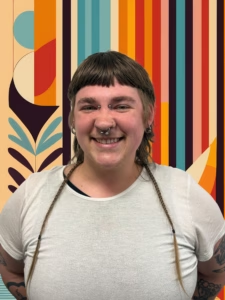
Around That’s the Rub, there are plenty of ways to find some of that this month. Our facials are back, with Maya and Ryn offering relaxing, customized experiences designed around what your skin—and the rest of you—needs that day. If your idea of self-care includes warm towels, soothing touch, refreshed skin, and a chance to simply be still for a while, this may be exactly the invitation you’ve been waiting for.
You can even schedule a facial and a massage and make it a spa day. We have robes and tea for just such an occasion.
We also have some great massage openings throughout the week.
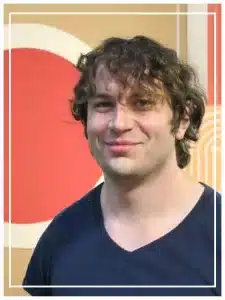
Tuesdays are a wonderful opportunity to get on the schedule with Mike or Chris. Wednesdays bring some usually harder-to-find openings with Kevin or Terence, and Thursdays you may find time available with Mack or Noemi.
If you’ve been saying, “I really need to schedule a massage,” consider this your gentle reminder. And while we’re talking about connection, I’d love to invite you into another part of my world.
If you missed Bloomington’s First Friday Gallery Walk, my show, Articles of Connection: Between Shadow and Light, is still hanging at Gather through September 29.
Seeing the collection together is part of the experience. Each piece explores connection in a different way—the connection between body and emotion, between one experience and the next, between what we know about ourselves and what we are only beginning to notice.
When I stood back and looked at the collection as a whole, even I was moved by what I saw. I had never seen the pieces hung together before.
The work spans multiple series painted over the course of two years, yet somehow they all speak to each other. Together, they tell the story of my life in ways I didn’t fully see until they were all in the same room.
I found myself making new connections between their stories, seeing familiar pieces with fresh eyes. If you enjoy art, story, and noticing the connections that exist all around us, I think there is something there for you too. If you have a chance, stop in and spend some time with the collection before the show comes down at the end of September. I would love to hear about your experience. And if looking at art makes you wonder what might happen if you picked up the paintbrush yourself, there’s an opportunity for that too. My next Wellbeing Through Art 5-Week Journey begins Sunday, October 4. Register here: www.lisakeplingerwellbeing.com We’ll meet Sundays from 3–5 PM through November 1. You can participate in person—which is my favorite way to experience this work—or join us online. No art experience is necessary…really. You don’t need to know how to paint. You don’t need to consider yourself creative. And you definitely don’t need to make something pretty. We use art as a way to slow down, notice what’s happening inside us, work with places where we may feel stuck, see ourselves from a different perspective, and sometimes discover that throwing paint onto a canvas is simply ridiculously fun. All supplies are provided for in-person participants, and the groups are intentionally kept small so there is room for each person and whatever shows up along the way. Maybe that is the thread running through all of these things. Massage. Facials. Art. Community. It’s what That’s the Rub has always been about. Different ways of coming back into relationship with ourselves and with each other. Because healing, joy, curiosity, and sometimes a whole lot of laughter can happen when we give ourselves space to slow down and connect. And I don’t know about you, but I need a whole lot of that right now. Connection, as I’ve been learning again and again, changes things. That’s the Rub, Lisa